Description of the ErP-ecodesign directive
The aim of ecological design or "ecodesign" is to improve the environmental performance of the products throughout their life cycle (selection and use of raw material, manufacturing, packaging, transport and distribution, installation and mainte-nance, use and end of life cycle) by means of the systematic integration of environmental aspects right from the start of designing the products or services. Energy-related products are those that impact the energy consumption during their use and, therefore, not only include the products that depend on the energy supply (electricity, fossil fuels or other energy sources) or generate, transfer and measure that energy, but also those products that affect the energy consumption of others, (for example windows, etc.).
Those products therefore account for a high percentage of energy consumption and other natural resources in the Community and offer a huge potential to cut greenhouse gas emissions. Therefore, the European Commission considers those products as priorities to integrate ecodesign and energy labelling.
THE ECODESIGN DIRECTIVE
The ecodesign directive 2009/125/EC set up a framework to establish ecodesign requirements applicable to energy-related products. That Directive is, therefore, a key aspect of EU policy to improve the environmental and energy performance of the products on the internal market. The Directive guarantees the free circulation of products throughout Europe and encourages small and medium-sized enterprises (SMEs) to integrate ecodesign.
IMPLICATIONS OF THE ECODESIGN DIRECTIVE
The Ecodesign Directive is a framework directive, which means that it does not establish direct obligations for the manufacturer but rather sets binding ecodesign requirements by means of adopting specific measures for each product group. The Directive therefore only establishes the conditions and criteria to adopt the implementation measures by means of the associated regulations that are published. Therefore, on the relevant Regulation has been published, the products put on the market have to comply with the measures indicated in the regulation to be able to use the relevant CE marking, without which they cannot be marketed in the European Economic Area. Those measures refer both the product require-ments and management requirements.
ENERGY LABELLING DIRECTIVE
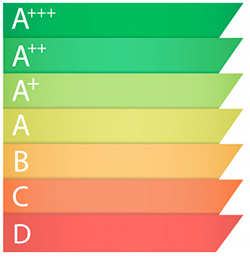
The Energy Labelling Directive 2010/30/EU refers to the indication of the energy consumption and other resources of the energy-related products, by means of labelling and standardised information. It therefore aims to inform the consumer about that consumption, by allowing the products on the market to be compared. It is being developed in parallel to the Ecodesign Direct, as it is also implemented through specific product family regulations.