
CIE Automotive
Semi-automatic reconstruction of surfaces of forging tools
The aim of this project is to achieve a semi-automatic process for forge tools repair, thereby obtaining a more sustainable repair process, reducing the use of resources and operation times. This project was carried out in collaboration with a student from the Ecodesign Classroom from the Bilbao Technical School of Engineering, belonging to the UPV-EHU.
This new process, known as the GOM digitalisation system, is more environmentally sustainable, as the areas which are in most need of improving - namely energy consumption and machining time - are reduced considerably. Other aspects of the process are also modi?ed, such as the use of non-contaminating lubricants for the stamping process, and the reduction of waste generated as drill lubricant, waste water produced by cleaning operations, or metallic waste.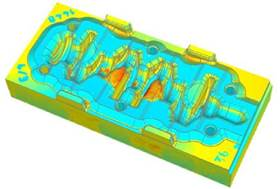 murrizten. Gainera beste alderdi batzuk ere aldatzen dira, adibidez, kutsagarriak ez diren labaingarriak erabiltzea estanpan, edota sortutako hondakinak gutxitzea (taladrina, garbiketako hondakin-ura edo hondakin metalikoak).
The results of the project were:
- The new process which has been proposed (GOM) reduces the machining time by 63% compared with the current process.
- The environmental impact generated by the GOM process is 27% less than the current process, and 80% less than the traditional imprint-?lling process.
- Repairing the stamp in question using the newly-proposed process reduces CO2 emissions into the atmosphere by 25% compared to the current process.
Life-cycle assessment of parts for use in the automotive industry
This project focuses on the environmental assessment of alternative materials for the manufacturing of automotive parts, replacing non-ferrous metal materials. The project also includes a study of di?erent kinds of recycling and the end-of-life treatment of the parts which have been subject to analysis. As with the previous case study, this project was also carried out with the support of the aforementioned Ecodesign Classroom.
The materials which are evaluated over the course of this project are polyamide 6 and polyamide 6.6 with a reinforcement of 30% of glass ?bre as plastic matrices as well as both unidirectional and bidirectional carbon ?bre and glass ?bre. The results of the project were:
- Epoxy resin generates a lesser impact on the environment than thermoplastic matrices.
- The production of carbon ?bre is more harmful to the environment than that of glass ?bre.
- The most favourable processes in terms of their environmental impact were the PA 6.6/Carbon Fibre recycled/mechanical recycling, PA 6.6/Glass Fibre recycled/mechanical recycling and PA 6.6/Glass Fibre cut/mechanical recycling.
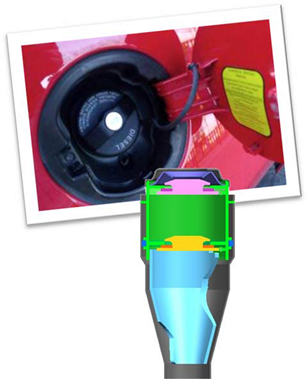
Quantifying emissions at car filler necks own brand products
In the case of petrol vehicles, the majority of evaporation emissions are due to the loss of hydrocarbons from the fuel system, more speci?cally the main contributions to the evaporation emissions come from the evaporation of fuel from the fuel tank and the permeation through fuel hoses, fuel tank, connectors, gaskets, etc.
CIE is beginning to study di?erent solutions under a similar premise that help to cut those hydrocarbon emissions. The aim is to conduct a comparative emissions study in terms of Ecodesign and amount of hydrocarbons, between the traditional fuel ?lling system and the new CAPLESS system in the following areas:
- Hydrocarbon emissions with the system instandby (closed system).
- Hydrocarbon emissions due to ageing (closed system
- Hydrocarbon emissions during refuelling.
Determining the environmental cost factor in car components
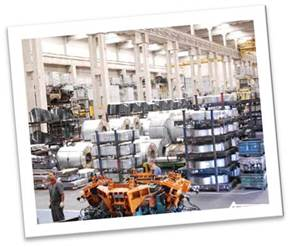 The goal of this project was to conduct a lifecycle assessment (LCA) of the production processes of one of the company’s plants. The selected plant was CIE- Inyectametal located in Abadiño, which manufactures aluminium parts for the car industry by means of high pressure aluminium injection technology. This calculation using SimaPro software seeks to provide customers with the environmental cost, i.e. the carbon footprint, of the manufactured product. There is also the further goal of having a competitive advantage over other manufacturers.