
Eroski
Redesign of containers and packaging for own-brand products
Loyal to its commitment to the environment and following its strategic plan, whose objective is to reach environmental sustainability through process efficiency, EROSKI reduces the environmental impact of the container and packaging of its products.
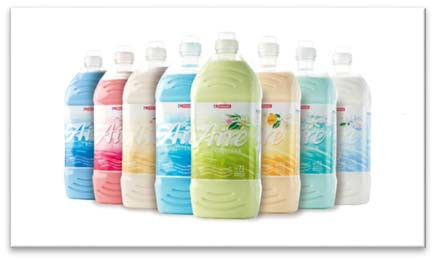 By means of a proprietary ecodesign tool, it can compare the effect of different container formats, both in terms of global environmental impact and GHG emissions throughout the whole life cycle and in terms of derived costs (materials, productive process, transport, final management).
Thus, it can incorporate sustainability criteria when selecting the container format which will be most suitable for a product. The primary objective is to reduce or minimise the environmental impact of containers and
packaging marketed through the strategic ecodesign option in their redesign. The project aims to incorporate progressively these considerations in the different own-brand product types available.
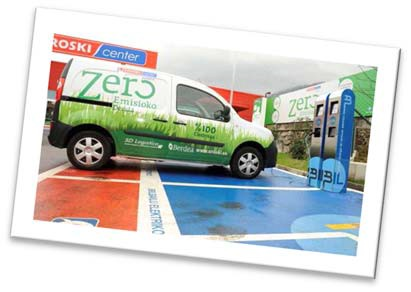 Methodology to assess sustainability in food distribution
A tool has been designed to provide information on the different environmental actions performed by the main retail chains, with the information being stored in a clear and organised way and which is easy for the user to interpret. These actions are weighted and quantified and this allows us to compare which companies are doing more or less in the environmental arena.
This tool has been designed for Eroski in order to provide information and a tool that enables it to evolve and increase its environmentally sustainable actions and its corporate image to gain added value.
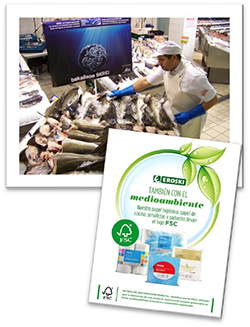 EROSKI use environmental certificate to foster the consumption of environmental products
EROSKI consolidates its commitment to sustainable consumption by including environmental guarantees in its products.
That is the case of the FSC (Forest Stewardship Council) sustainable timber products, as it received in 2010 the FSC International Partner Award given the commitment to sell and disseminate FSC products, which guarantee responsible use of forestry resources, MSC (Marine Stewardship Council) sustainable fishing products or organic cotton.
EROSKI signed up to the WWF (World Wildlife Foundation) Sustainable Fishing Initiative to obtain the MSC certificate in 2010, in order to ensure that its shellfish and fish sources were sustainable and environmentally friendly. It was the first Spanish distribution company to introduce products with the MSC eco-label in the fish counter in the fresh goods section.
EROSKI currently has ten seafood items with MSC eco-labelling, including species such as Skrei cod, from the north of Norway, South African hake or Alaskan Pollack.
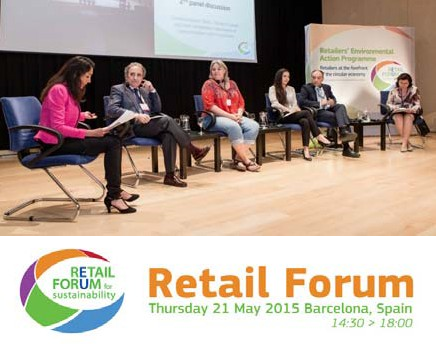 EROSKI takes part in the European Retail Forum as part of the 18th European Union Ecoinnovation Forum
On 21 May 2015, Eroski took part in the European Retail Forum, which was held outside Brussels for the first time, specifically in Barcelona as part of the 18th European Ecoinnovation Forum.
Specifically, Eroski, presented by the expert on responsible consumption and editor of the Eroski-Consumer magazine, Alejandro Martínez Berriochoa, intervened in the second discussion channel held during the event and which focused on communication tools, the value of eco-labelling and its limitations and the new means of communicating with consumers.
Along with Eroski, the other speakers were Carlos Martínez-Orgado, from the Foundation for the Circular Economy, Marion Sollbach from the Kaufhof Gallery (member of the METRO GROUP) and Angeliki Malizou from BEUC.
The session was brought to an end by Kestutis Sadauskas, the Director for Green Economy of the European Commission.